
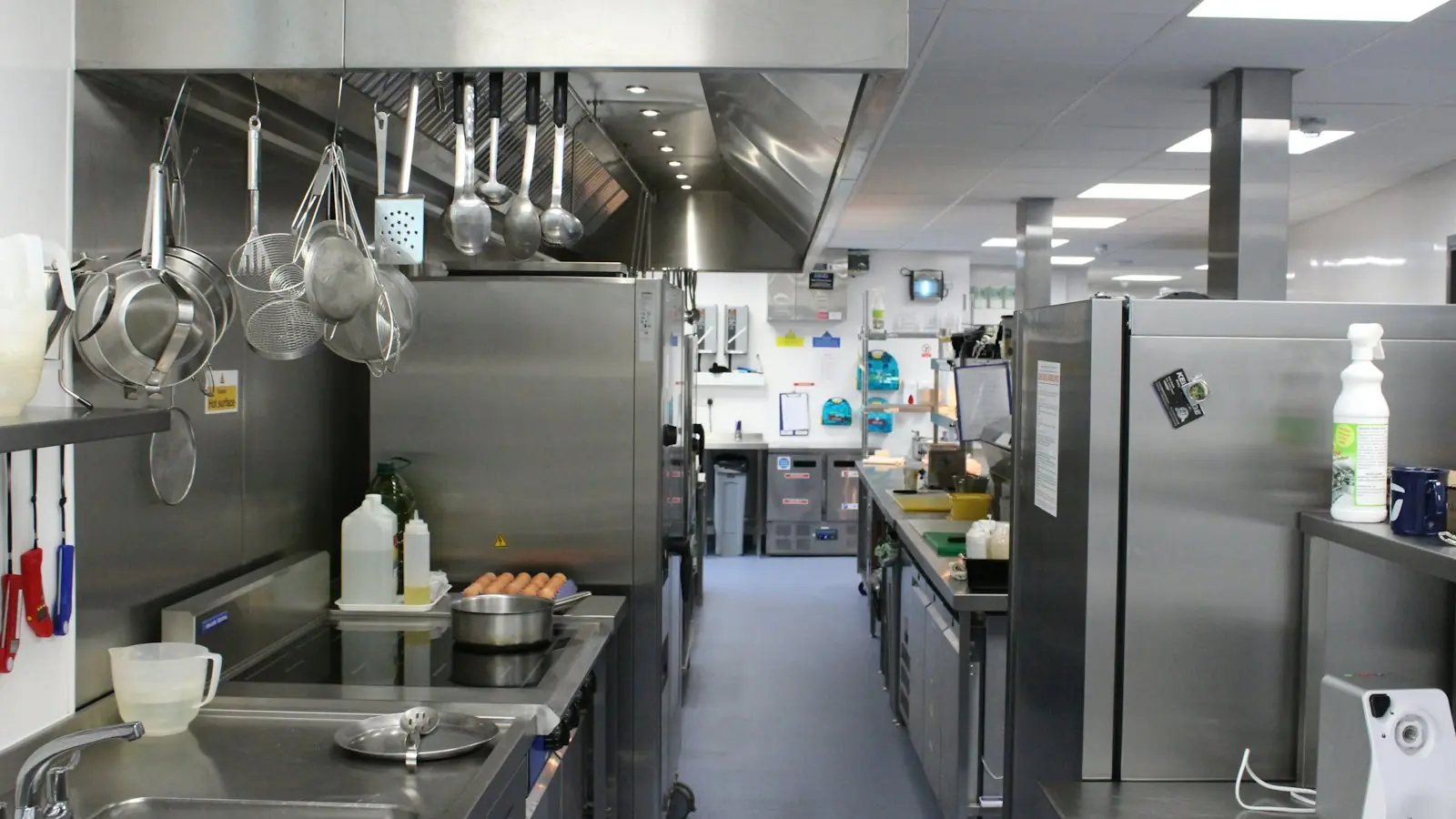
Quick answer: The Hartford reports that its restaurant customers pay an average of $1,863 a year, or $155 a month, for workers' compensation. NEXT Insurance puts the median for restaurants at $160 a month, based on its active customers over the past 12 months. Your own premium is your class rate per $100 of payroll, times your experience mod, so payroll size, job classes and claims history move it most. Most states require it once you have one employee, but the threshold is three in Georgia and Virginia, four for non-construction employers in Florida, and optional for most private employers in Texas.
This guide covers what restaurant workers' comp costs, how the premium is calculated, the class codes restaurants are rated under, how tips and service charges count as payroll, which of Aiden Risk's 16 states require it, and the practical ways to lower the bill. If you want a quote rather than a guide, go straight to our restaurant workers' comp page.
What restaurant workers' comp costs
Two carriers publish restaurant figures. They come from different customer pools and measure different things (one is an average, the other a median), so read them as reference points, not a price.
| Source | Published figure | What it is |
|---|---|---|
| The Hartford | $1,863 a year, or $155 a month | Average premium for restaurants in its cost by industry table |
| The Hartford | $1,032 a year, or $86 a month | Average across all of its small business customers, every industry |
| NEXT Insurance | $160 a month median | Median for restaurants, from NEXT active customers over the previous 12 months, updated October 2026 |
Restaurants pay well above the all-industry average, and the injury data further down shows why: frequent cuts and burns, and the occasional very expensive back claim. A small cafe with five staff may land below these figures; a full-service restaurant with 40 employees and a bar will land far above them. For how comp fits next to your BOP, liquor liability and the rest, see our restaurant insurance cost guide.
How restaurant workers' comp premium is calculated
Workers' comp is not priced per employee. The Hartford explains the basic formula: your classification rate, times your experience modification, times your payroll divided by 100. Each class code carries its own rate per $100 of payroll, set by the state's rating bureau and the carrier's filing.
Here is how that works with made-up numbers, for illustration only. A restaurant with $400,000 of payroll in a class rated at $2.00 per $100 starts at $8,000 a year with a 1.00 mod. The same restaurant with a 0.85 mod pays $6,800, and with a 1.25 mod pays $10,000. Real rates vary widely by state and class, and carriers add fees, taxes and minimum premiums.
The experience mod
The experience mod compares your claims history with similar businesses. A mod of 1.00 is average, below 1.00 earns a credit and above 1.00 adds a surcharge. Each state sets its own rules for who qualifies, so not every restaurant has a mod. Run your own numbers through our EMR calculator, and see our guide to how claims history affects your rates for what moves the mod.
Workers' comp class codes for restaurants
Your class code sets your rate, so it is the single most important line on the policy. In most states that use NCCI's classification system (Oregon and Texas are exceptions), restaurants have been rated under four codes since 1996. An NCCI filing presented to Oregon's rating committee in April 2026 lists them:
| NCCI code | Name | Typical restaurant use |
|---|---|---|
| 9082 | Restaurant NOC | Full-service, sit-down restaurants; also caterers |
| 9083 | Restaurant: Fast Food | Counter service, fast food and fast casual; also doughnut shops |
| 9084 | Bar, Discotheque, Lounge, Nightclub, or Tavern | Bars and taverns |
| 9058 | Hotel, commissary or motel restaurant employees | Food service staff working for a hotel, motel or commissary operation |
NCCI's same research found that 9083 restaurants had a higher claim frequency than restaurants overall, while 9082 and 9084 had higher severity. In that filing (Item B-1452), NCCI also proposed new phraseologies for buffets, ghost kitchens, specialty drink shops, ice cream shops and mobile food vendors, and adding drivers to restaurant classes. It was presented for discussion, so check whether your state has adopted it.
States that use their own bureau or class system
NCCI handles 35 states and the District of Columbia. According to the American Academy of Actuaries, 11 states have their own independent rating bureaus, including six of Aiden's states: California, Delaware, Massachusetts, New Jersey, New York and Pennsylvania. The same brief notes Pennsylvania and Delaware use a different classification system. Four states, including Ohio and Washington, are monopolistic: comp comes from the state fund (or self-insurance), not a private carrier.
California is the clearest example of why the NCCI code alone is not enough. Its rating bureau, the WCIRB, eliminated the old 9079 Restaurants or Taverns class for policies starting on or after September 1, 2024 and replaced it with six classes: 9058 hotel food and beverage employees, 9080 full-service restaurants, 9081(1) restaurants not otherwise classified, 9082 caterers that are not restaurants, 9083 fast food or fast casual restaurants, and 9084 bars or taverns that are not restaurants. Note that 9082 means a caterer in California but a full-service restaurant in NCCI states. Our California workers' comp page covers that market in more detail.
Clerical staff and split payroll
A bookkeeper or office manager can sometimes be rated in a clerical class (8810 in NCCI states and in Massachusetts), which costs far less than a restaurant class. The rules are strict. Ohio's rule, for example, limits duties to office work such as records, phones and data entry, done in a workstation physically separated from the operating hazards by walls, partitions, counters or other barriers. A manager who also expedites, runs food or covers the line generally does not qualify. Classes can only be split where the state manual allows it, and the auditor will check.
Tips, service charges and what counts as payroll
Because premium is calculated on payroll, what counts as payroll matters. Under NCCI rules, tips that guests leave at their discretion are excluded. Mandatory service charges and automatic gratuities were not addressed until NCCI filed Item B-1449, which revises the payroll rules so that service charges and automatic gratuities are included in payroll for new and renewal policies effective on or after January 1, 2024. The Texas Department of Insurance order adopting it explains the reasoning: the IRS treats service charges paid to employees like wages, and NCCI concluded they belong in payroll. Business Insurance reported the change would affect 32 states and the District of Columbia.
In practice: a restaurant that adds an automatic 18% gratuity to large parties, or has replaced tipping with a service charge, should expect that money in its comp payroll. Report it in your payroll estimate rather than letting the audit find it. Independent bureau states set their own payroll rules, so confirm yours. How those charges are paid out to staff is a wage law question for your accountant or employment counsel; our EPLI guide for restaurants covers that risk.
Do restaurants need workers' comp? State rules in Aiden's 16 states
Whether you must carry it is set by state law, and part-time staff almost always count. The table below covers the 16 states where Aiden Risk is licensed, each from the state agency or statute.
| State | When a restaurant must carry workers' comp | Where you buy it |
|---|---|---|
| Arizona | Any employer with workers regularly employed in the business, with no minimum headcount | Private carrier or self-insurance |
| California | Even if you have only one employee | Private carrier or competitive state fund; WCIRB class system |
| Colorado | One or more employees, part-time, full-time or family | Private carrier or competitive state fund |
| Delaware | Almost every employer with one or more employees | Private carrier; independent bureau |
| Florida | Four or more employees for non-construction businesses, counting corporate officers and LLC members | Private carrier |
| Georgia | Three or more persons regularly employed | Private carrier |
| Illinois | Any employer with at least one worker, including one part-time employee | Private carrier |
| Maryland | One or more employees, with few exceptions | Private carrier or Chesapeake Employers' Insurance Company |
| Massachusetts | All employers with employees, regardless of hours or headcount | Private carrier; independent bureau |
| New Jersey | All employers with anyone working for pay, including corporate officers | Private carrier; independent bureau |
| New York | Virtually all employers, including for part-time employees | Private carrier or competitive state fund; independent bureau |
| Ohio | One or more employees regularly in the same business | Ohio BWC only (monopolistic) or self-insurance |
| Pennsylvania | At least one employee, even working limited part-time hours | Private carrier; independent bureau and class system |
| Texas | Optional for most private employers; non-subscribers must report to the state that they do not have coverage | Private carrier or competitive state fund |
| Virginia | More than two employees regularly employed | Private carrier |
| Washington | Employers with workers generally need coverage | L&I state fund only (monopolistic) or self-insurance |
Two notes. Texas restaurants deciding whether to subscribe should read our Texas restaurant insurance requirements guide first. And in Ohio and Washington, as NEXT Insurance explains, the state fund policy does not include employers liability coverage, which is the gap stop gap coverage fills. The competitive state funds in the table are listed in the American Academy of Actuaries brief. Multi-state groups should read our mid-market workers' comp guide.
Common restaurant injuries, and what they cost
AmTrust reviewed nearly 130,000 restaurant workers' comp claims from 2018 to 2023 for its 2024 Restaurant Risk Report. Frequency and cost point in different directions.
| Injury | How common | Average cost per claim (AmTrust) |
|---|---|---|
| Cuts, punctures and scrapes | Most common | $1,798 |
| Burns and scalds from hot surfaces and oil | Second largest category | $4,326 |
| Sprains | Less frequent than cuts and burns | $9,966 |
| Muscle strains | Less frequent than cuts and burns | $10,672 |
| Disc, vertebrae and spinal cord injuries | Under 1% of claims | $60,000 to $85,000 typical paid claim |
One back injury can cost more than dozens of cut claims, which is why AmTrust urges training staff in safe lifting and good ergonomic practice.
Pay-as-you-go billing and the annual audit
A standard policy is priced on estimated payroll, then audited after the term. If you grew, hired seasonal staff or added a service charge, the audit sends a bill. Pay-as-you-go billing links premium to real payroll each pay cycle instead. Pie Insurance describes its version as a monthly premium based on actual payroll rather than an estimate, with zero percent down, which it says helps avoid an additional bill after the annual audit. The audit itself still happens, and pay-as-you-go does not fix a wrong class code.
How to lower restaurant workers' comp cost
- Check every class code. A sit-down restaurant miscoded as a bar, or a fast-casual concept rated as full service (or the reverse), pays the wrong rate every year. In California, confirm you moved to the right post-2024 class.
- Split clerical payroll only where it qualifies. A truly separate office employee can go in the clerical class; a manager who works the floor cannot.
- Estimate payroll honestly, service charges included. A low estimate does not save money, it moves the cost to the audit.
- Run a return-to-work program. Light-duty tasks such as prep, inventory or hosting let injured staff come back to work when their doctor allows it, instead of staying out on full lost-time benefits.
- Target the costly injuries. Cut-resistant gloves, non-slip mats and floor cleaning routines for the frequent claims; lifting training and carts for the expensive back claims.
- Report injuries promptly. Tell your carrier right away and meet your state's reporting deadline; every claim's cost feeds your mod.
- Watch your mod. Request loss runs and check the worksheet for closed claims still carrying reserves.
Before you shop, have ready: payroll by location, state and job role; how tips, service charges and automatic gratuities are handled; headcount including part-time and seasonal staff; any delivery drivers; three to five years of loss runs; and your current experience mod worksheet if you have one.
How Aiden Risk Solves Each of These Problems
Most restaurant comp overpayment comes from codes and payroll, not rates. Aiden Risk is an AI-native independent commercial insurance broker that pairs an AI risk engine built for commercial insurance, which analyzes 140+ signals about a business, with a licensed broker on every account.
| The problem | How Aiden Risk solves it |
|---|---|
| Wrong or outdated class code | Your licensed broker reviews each role against your state's class system, including California's post-2024 food service classes, before the policy binds. |
| Clerical and kitchen payroll lumped together | Your broker checks which staff qualify for a clerical class and documents the split the way auditors expect. |
| Service charges missing from the payroll estimate | Your broker asks how tips, service charges and automatic gratuities are paid and builds them into the estimate, so the audit holds fewer surprises. |
| Experience mod rising after a few claims | The AI tracks claims and loss runs through the year, and your broker reviews the mod worksheet with you and points out the claims driving it. |
| Large audit bills after a busy season | Your broker compares carriers that offer pay-as-you-go billing tied to actual payroll. |
| Different rules in each state you operate in | Your broker structures coverage for each state, including stop gap employers liability where Ohio or Washington state funds leave a gap. |
Aiden Risk charges no fee to work with it, with no platform fee or subscription; it is paid through standard carrier commissions. We place coverage across 100+ carriers and 13 commercial lines; our restaurant insurance page covers how we approach restaurants. Intake takes 5 minutes, and most straightforward businesses are placed in as little as 48 hours. We are licensed in 16 states, listed on our licenses page.
Key Takeaways
- The Hartford reports restaurants pay an average of $1,863 a year for workers' comp, and NEXT reports a median of $160 a month.
- Premium is your class rate per $100 of payroll times your experience mod, so class codes and payroll accuracy matter most.
- NCCI states rate restaurants under 9082, 9083, 9084 and 9058, while California, Delaware, Massachusetts, New Jersey, New York and Pennsylvania use their own bureaus, and Ohio and Washington are state fund only.
- Since January 2024, NCCI counts mandatory service charges and automatic gratuities as payroll; voluntary tips are still excluded.
- Most of Aiden's 16 states require comp from the first employee; Georgia and Virginia start at three, Florida non-construction at four, and Texas is optional for most private employers.
- Cuts and burns are the most common restaurant claims, but back injuries are by far the costliest.
FAQs
How much is workers' comp for a restaurant?
The Hartford reports an average of $1,863 a year, or $155 a month, for its restaurant customers, and NEXT reports a median of $160 a month. Your premium depends on your payroll, class codes, state and experience mod, so a larger restaurant will pay much more.
Do restaurants need workers' comp?
In most states, yes, once you have employees. California, Illinois, New York, Pennsylvania and most others require it from one employee, including part-time staff. Georgia and Virginia require it at three, Florida at four for non-construction businesses, and Texas lets most private employers choose.
What is the workers' comp class code for a restaurant?
In NCCI states, a full-service restaurant is usually 9082 Restaurant NOC, a fast food or fast casual restaurant is 9083, and a bar is 9084. California uses its own system: since September 2024, full-service restaurants are 9080 and fast food or fast casual is 9083. Pennsylvania and Delaware use their own class systems too.
Are tips included in workers' comp payroll?
Voluntary tips that guests leave at their discretion are excluded under NCCI rules. Under NCCI Item B-1449, mandatory service charges and automatic gratuities are included in payroll for policies effective on or after January 1, 2024, in the states that adopted it. Independent bureau states set their own rules.
How is restaurant workers' comp calculated?
Multiply your class rate by your experience mod, then by your payroll divided by 100. With illustrative numbers, $400,000 of payroll at $2.00 per $100 and a 1.00 mod comes to $8,000 a year, before fees and minimum premiums. Our EMR calculator shows how your mod changes the result.
Can I buy restaurant workers' comp from a private insurer in Ohio or Washington?
No. Ohio and Washington are monopolistic states, so coverage comes from Ohio BWC or Washington L&I, unless you qualify to self-insure. The state fund policy does not include employers liability coverage, which is the gap stop gap coverage is designed to fill.
Is pay-as-you-go workers' comp good for restaurants?
It often suits restaurants with seasonal swings or high turnover, because premium follows actual payroll each pay cycle instead of an annual estimate. It can reduce the chance of a large bill after the audit, but the audit still happens and it will not correct a wrong class code.
Paying more than you should for comp, or not sure your class codes are right? Start with our restaurant workers' comp page: a 5-minute intake, and a licensed broker who reviews your classes, payroll and experience mod before shopping your policy across carriers.